
Non-Silicone Dispensable Thermal Interface Material for SSD Modules
January 23, 2023
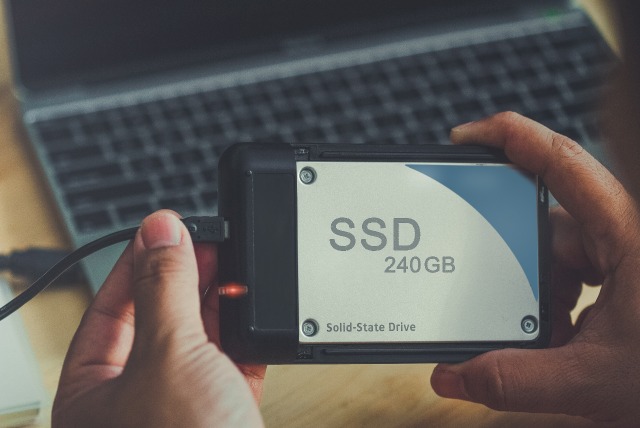
While by no means a new technology, Solid State Drives (SSDs) have shown a marked increase in adoption over Hard Disk Drives (HDDs) at both the consumer and enterprise scale over the last decade. With the advantages of faster speeds, no moving parts, long-term reliability, and quieter operation, SSDs have become the current standard as well as the future for data storage. As storage capacities increase and costs decrease, SSD device manufacturing will continue to grow, some estimating as much as a 15% CAGR through 2030. This increase in SSD devices is across most sub-categories of solid-state drives including SATA and M.2 as well as higher performance variations like PCIe/NVMe.
SSD DEVICE REQUIREMENTS
With the improved performance and greater power densities of smaller SSDs that are used to meet compact device specifications there is the need to dissipate increased heat outputs. Power consumption of SSDs has a strong correlation to the overall speed of the devices, with reading and writing speeds of up to 10,000 MB/s being pushed by PCIe/NVMe SSDs. As the power increases, so does the heat produced and, therefore, the need to dissipate heat. Many SSDs are already supplied with a corresponding heat sink that is designed to match the size (often times standard M.2 orientation) of the device. To better facilitate the transfer of heat, thermal interface materials (TIMs) such as thermal gap pads or dispensable gels are applied as an interstitial, thermally conductive material between the chips on the SSD and the heatsink or metal enclosure. These materials typically require a thermal conductivity of greater than 3 W/mK to effectively cool the SSD and improve the performance and life span.
ENGINEERING CHALLENGES
Even with a number of high-performance TIM products available by Parker Chomerics and others on the market, some engineering challenges still exist when selecting the optimal thermal interface material. These challenges include:
- Compression force – Even the softest thermal gap pads apply a compression force onto semiconductors and chips found on SSDs. Dispensable thermal gels are often used to minimize those forces.
- Silicone or other polymer oil bleeding – While a vast majority of TIMs are silicone-based, they may sometimes release silicone oils when under compression. This silicone oil is not only aesthetically displeasing but may also cause issues with effective electrical contact of components on adjacent boards due to silicone oil migration.
- High volume assembly – With the proliferation of computers, game consoles, and servers that utilize data storage equipment, manufacturing of SSDs must improve efficiency to keep up with demand. Dispensable thermal material such as thermal gels are an optimal solution because they can be integrated into high volume, automated dispensing equipment. Ideally, these dispensable materials consist of a single component that does not require any secondary curing process after being dispensed.
INTRODUCING THERM-A-GAP GEL 40NS
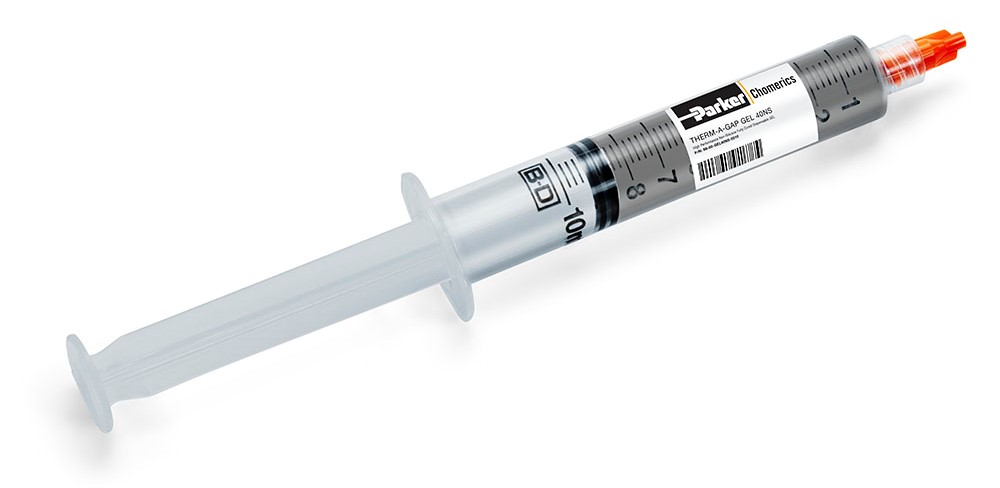
These challenges have led to the development of Parker Chomerics’ newest thermal interface material, THERM-A-GAP GEL 40NS. The “NS” in the product description represents the non-silicone nature of the material; instead utilizing a polyurethane base that is shown to bleed far less oil than silicone-based materials. This is the case even in applications where the TIM is compressed down to its minimum bond line. At a 4.5 W/mK thermal conductivity rating, GEL 40NS is able to meet the demands of a vast majority of SSDs at both the consumer and enterprise level. The dispensable nature of the GEL 40NS facilitates easier automated application and lower compression force relative to thermal gap pads.
CONCLUSION
Without a doubt, the use of solid-state drives for data storage in computing applications will continue to grow for years to come. Advancements in device storage capacity and reading/writing speeds will lead to more powerful components that must be cooled to maintain long term reliability. All these trends have led to the development of a new, non-silicone, high performance, one-component, dispensable thermal interface material by Parker Chomerics known as GEL 40NS.
For more details on GEL 40NS material properties or reliability testing data, to request a sample, or to speak to our applications engineering team, please see the product webpage here or reach out at here.

Ben Nudelman
Global Commerical Markets Manager
Parker Chomerics
PROVEN PERFORMANCE
The leader in Thermally Conductive Interface Materials.
We continue to advance technologies to bring new and enhanced capabilities and efficiencies.
Reduce EMI With Enhanced Board Level Shielding Components
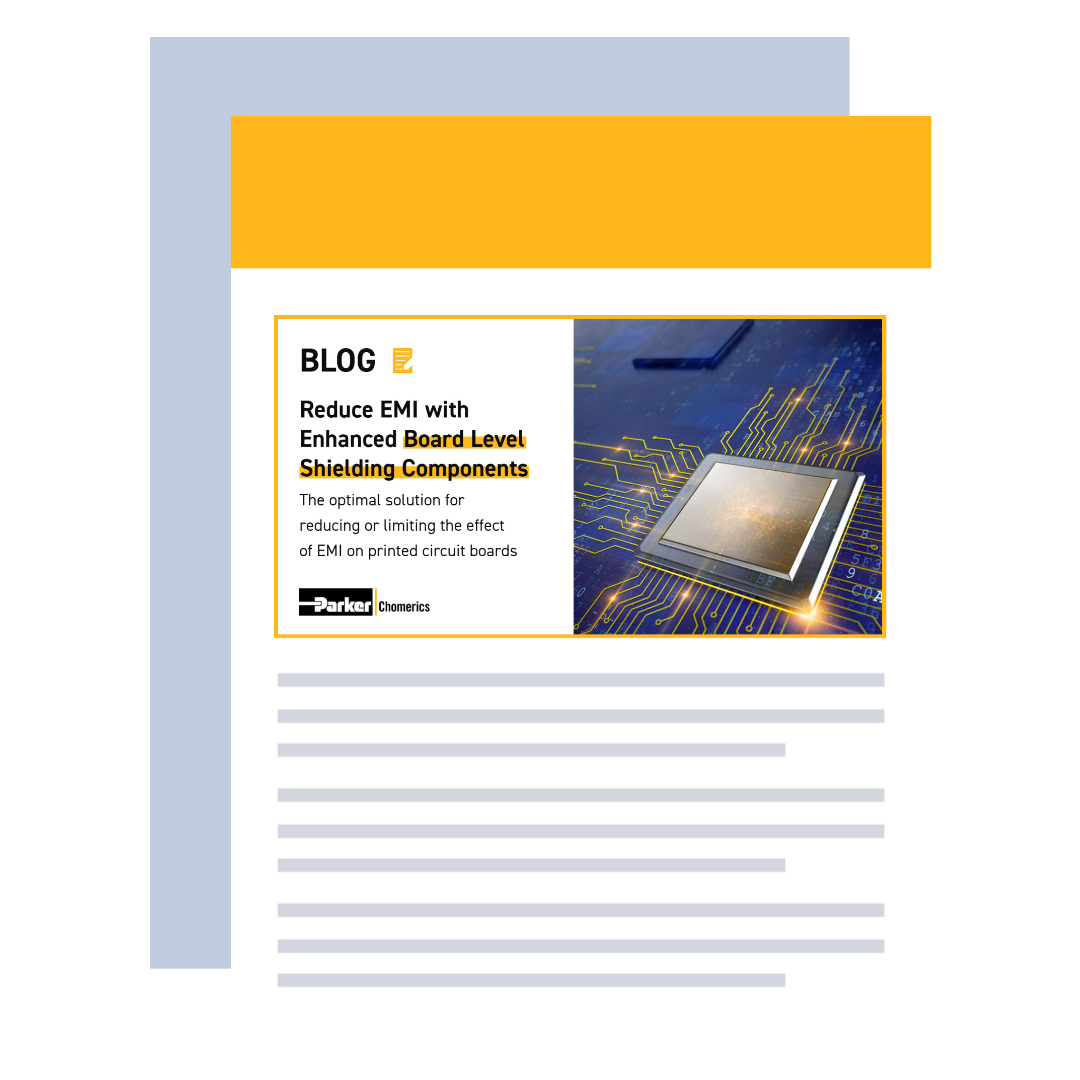
Electronic system performance can be compromised due to electromagnetic interference (EMI), reliability concerns and frustrations over product quality and with the rising popularity in wireless technology, it’s becoming more of a problem than ever. The good news is there are steps you can take to shield your devices and safeguard your equipment from the risks associated with radio frequency (RF) interference. Utilizing board level shielding (BLS) is one such step.
This Is the Next Generation High Performing Thermal Gap Filler Pad
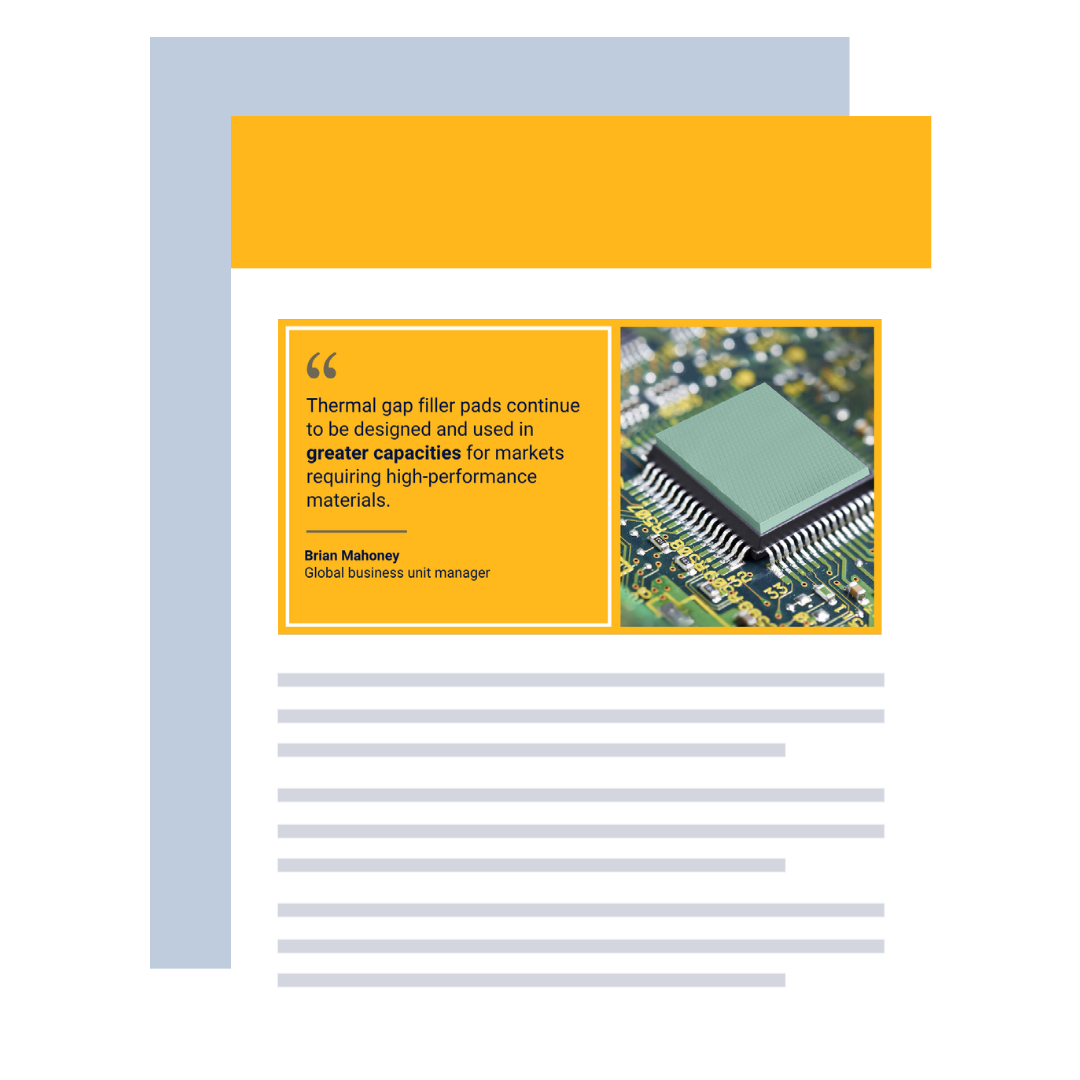
Looking for high thermal conductivity, yet ultra-soft thermal gap filler pad? Then you’ll want to take a close look at THERM-A-GAP PAD 60, which offers the enticing combination of both excellent thermal conductivity at 6.0 W/m-K, at a softness of 31 Shore 00. This makes THERM-A-GAP PAD 60 more than 40% softer than current-like-performance thermal gap pads from Parker Chomerics.
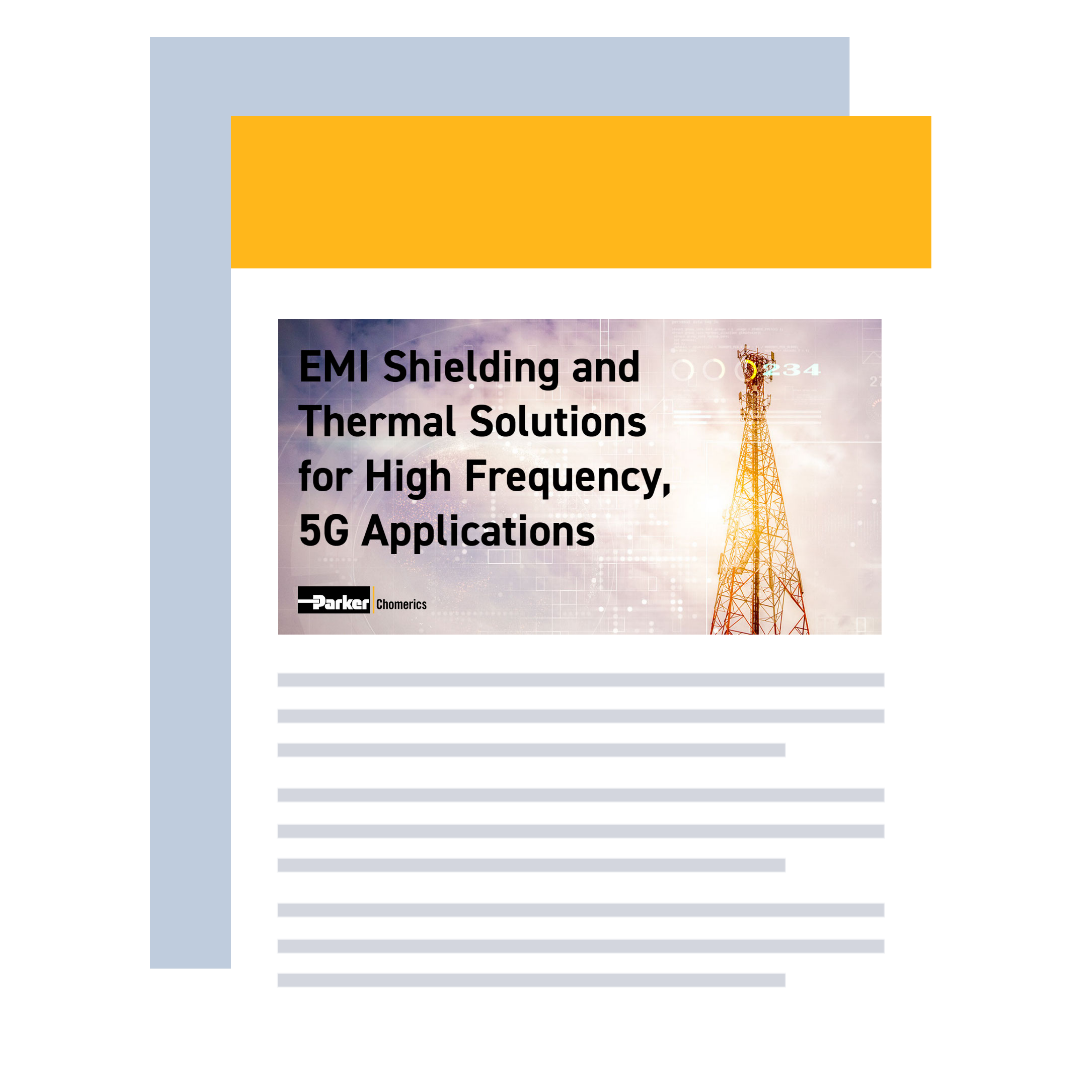
EMI Shielding and Thermal Solutions for High Frequency 5G Applications
Major telecom providers are working hard to overcome a range of technical challenges to deliver on 5G’s potential. One of the outcomes of this work will be a higher number of components in more compact spaces, which in turn prompts the need for effective electromagnetic compatibility (EMC) and thermal management solutions.
INNOVATION FOR THE FUTURE
The products you need to keep your electronics cool.
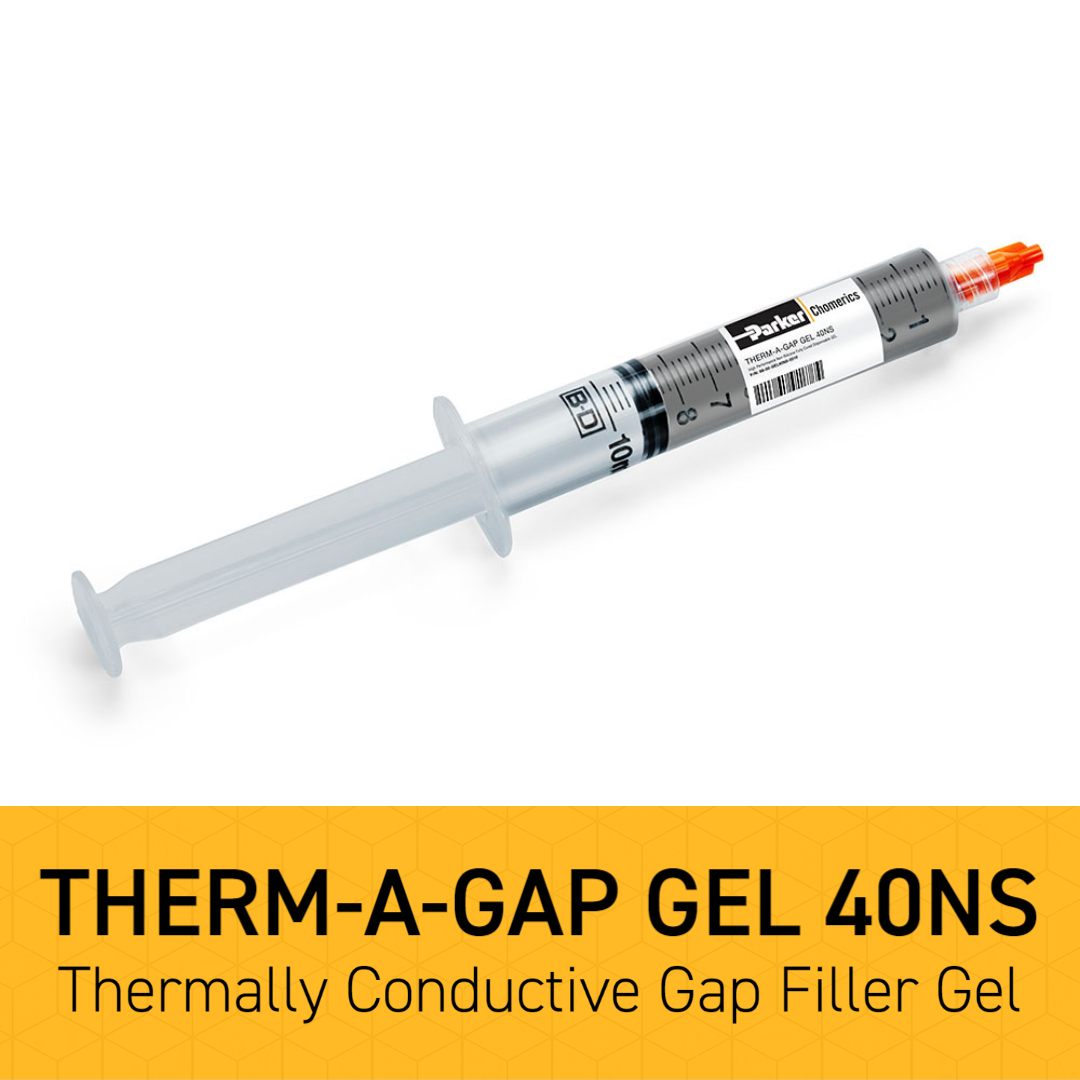
Parker Chomerics THERM-A-GAP™ GEL 40NS is a single-component, non-silicone, fully cured, dispensable gel with 4.0 W/m-K thermal conductivity.
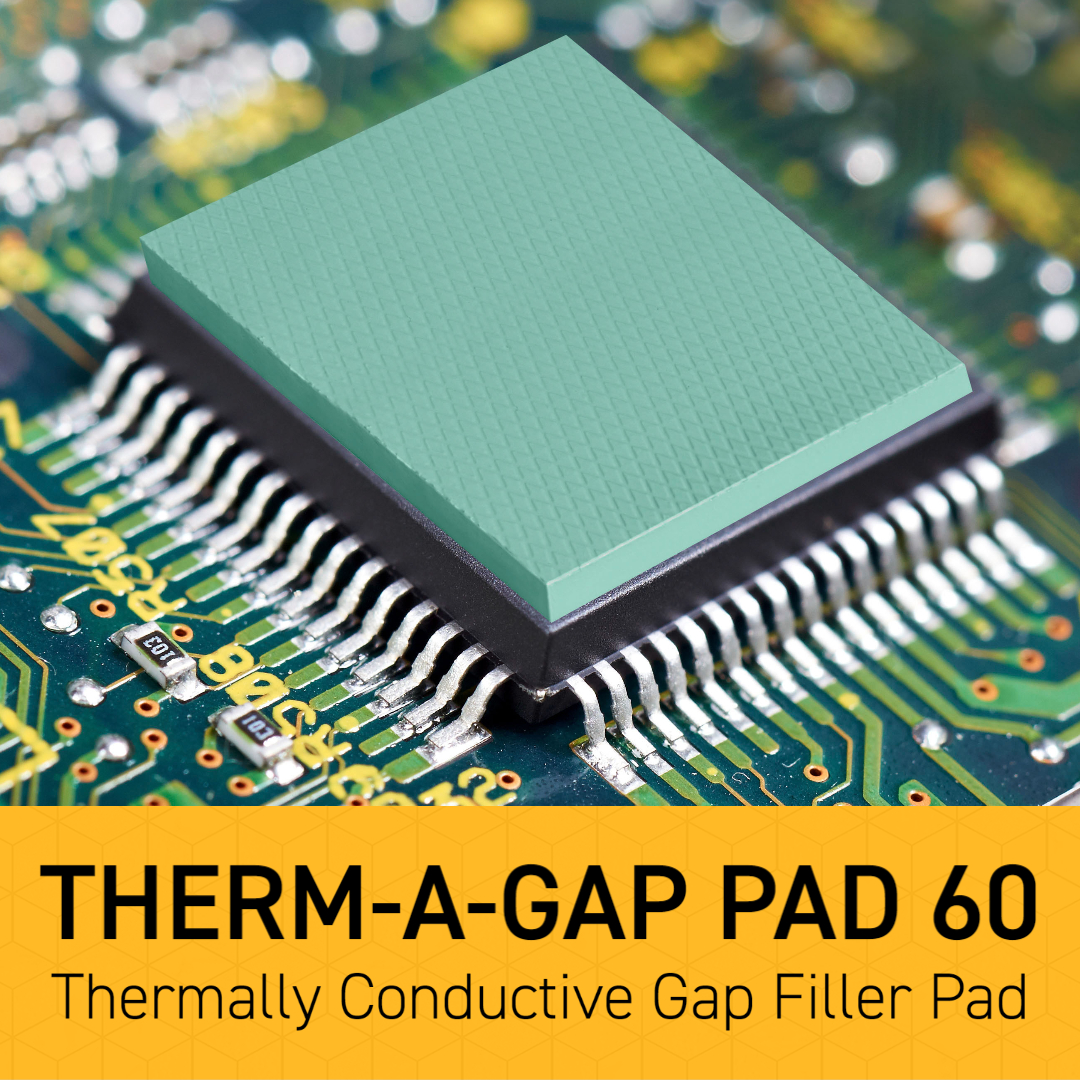
Parker Chomerics THERM-A-GAP™ PAD 60 offers very low deflection, along with very low outgassing, to provide an effective thermal interface between heat sinks and electronic devices.
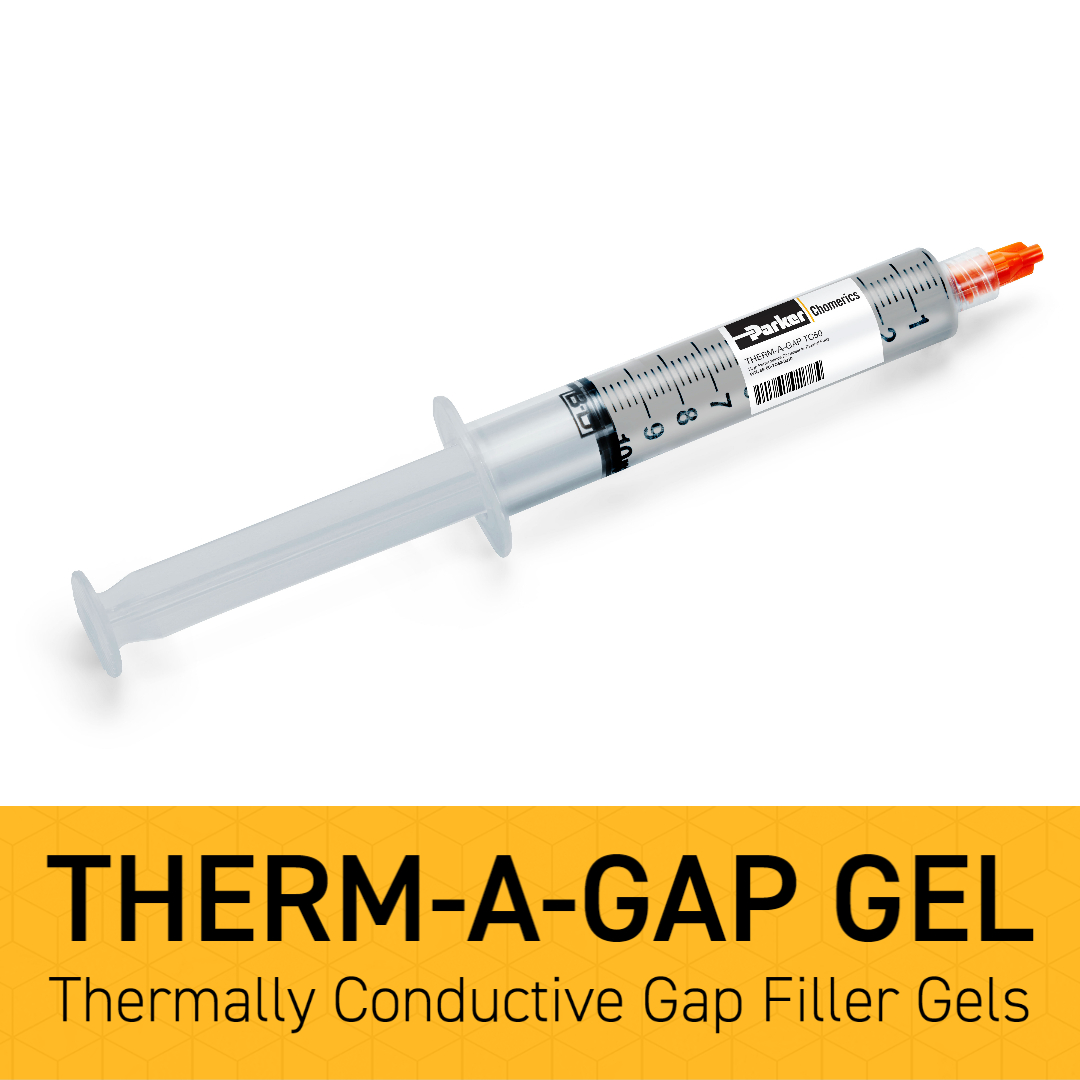
THERM-A-GAP GELs eliminate multiple thermal gap filler pad part sizes and their cross-linked gel structure provides superior long-term thermal stability and performance.
