Types of Cooling Architecture
There's a distinction between a serial and a parallel cooling architecture, depending on how the cooler is connected to the motor and inverter.To learn more about cooling architectures and to download the interactive sizing questionnaire please click here:
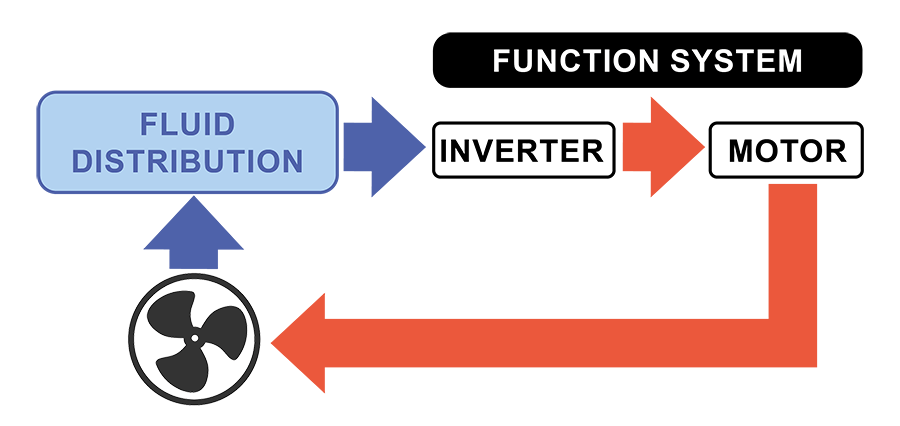
Serial Architecture
Serial architecture means that the outlet of the cooler is connected to the inlet of the inverter, the inverter's outlet connects to the motor's inlet. The motor's outlet goes back to the cooler's inlet.
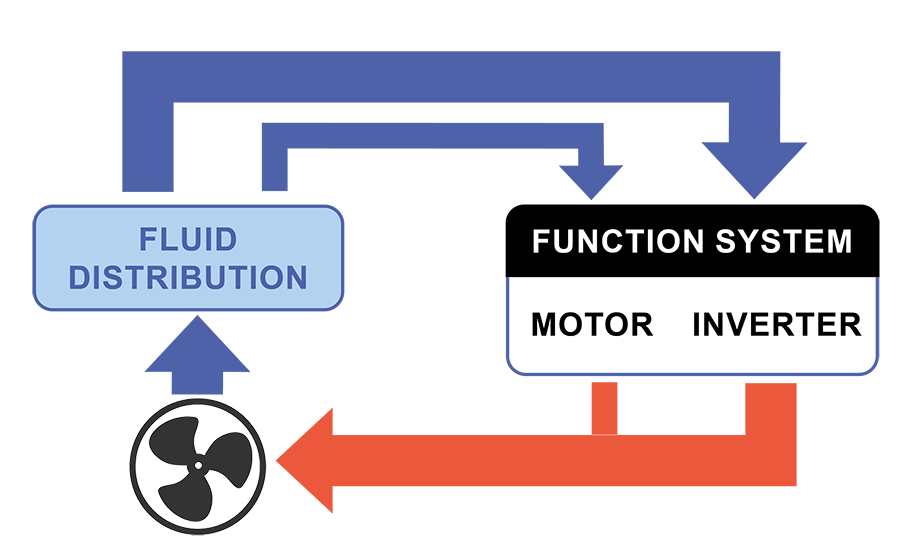
Parallel Architecture
Parallel architecture means that the cooler's outlet is connected to the inverter's and motor's inlet. The motor's and inverter's outlet goes back to the cooler's inlet.
Why choose a serial architecture?
A serial cooling architecture reduces leak points, pipe work, complexity of flow control (allows for low number of connectors), increased flow restrictions, needs a powerful water glycol pump)
Which technical parameters fit to serial cooling circle architecture?
When your application's ambient temperature is approx. 10°C from the recommended max. Water glycol inlet temperature for motor and inverter (Use of serial architecture for GVM / GVI only with Parker agreement)
What excludes a serial cooling circle architecture?
When the inverter's outlet temperature is higher than the recommended motor's inlet temperature.
Why choose a parallel architecture?
A parallel cooling architecture allows for low flow restrictions, low pressure drop, sufficient with simple water glycol pump. - Needs complex flow control and pipe work.
Which technical parameters fit to parallel cooling circle architecture?
Highly recommended by Parker's GVM / GVI manual. When your application's ambient temperature is close to the max. water glycol inlet temperature allowed for motor and inverter.
What excludes a parallel cooling circle architecture?
A parallel cooling architecture is suitable for all sorts of applications.